
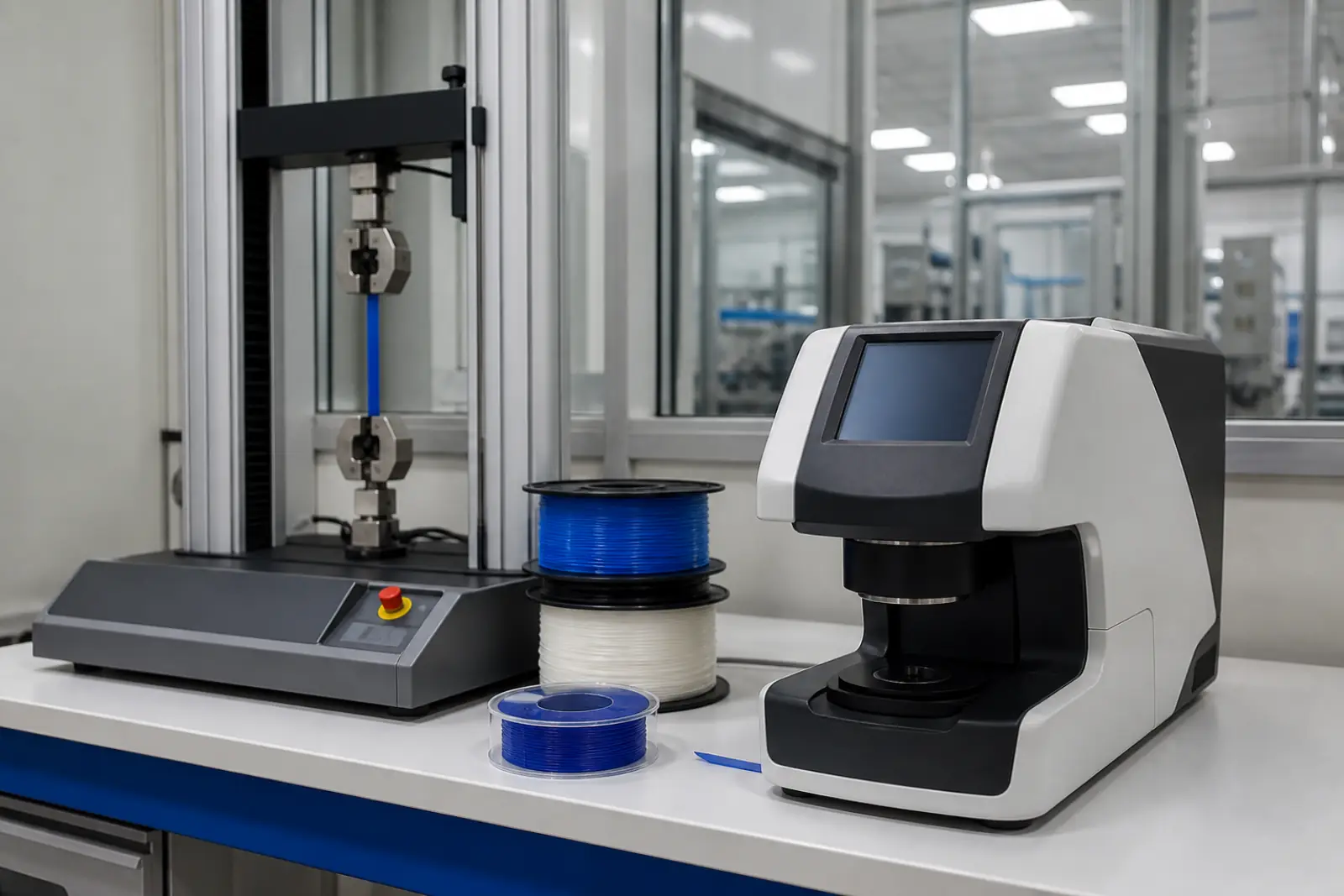
Moisture absorbed by filament turns to steam inside the hot end. The result is usually visible before it is measurable: popping or crackling sounds, a rough surface, inconsistent extrusion and parts that break more easily than expected.
Which materials absorb moisture
Nylon (PA), TPU and PETG absorb moisture noticeably faster than PLA. If a spool has been open in a humid room for weeks, assume it needs drying regardless of material.
Signs filament needs drying
- Crackling or popping while printing
- Visible steam or bubbles at the nozzle
- Rough, matte surface where you expect smooth
- Weak layer adhesion or brittle parts
Typical drying ranges
As a starting point, common drying ranges are roughly 40–50 °C for PLA, 60–70 °C for PETG, and 70–80 °C for TPU and nylon, for four to six hours. These are general industry ranges, not a specification — always follow the datasheet for the material you are using, and check that your dryer can hold the temperature accurately.
Storing filament
A sealed container with desiccant keeps filament dry between prints. For materials that absorb moisture quickly, print directly from a dry box.