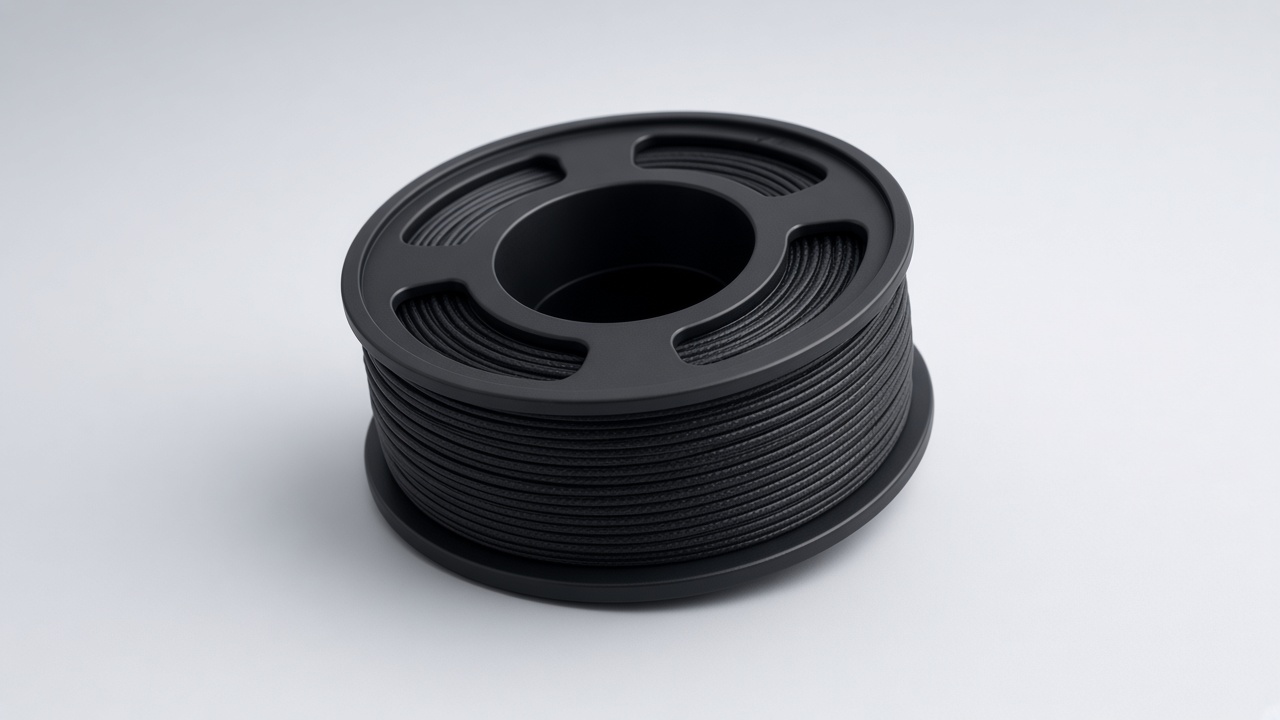
Druckanleitung

Druckeinstellungen, Bett- und Düsentemperaturen sowie Tipps für jede Materialfamilie.

PLA

Drucktemp. 205°C Bett-Temp 60°C

Low-warpage classroom-safe biopolymer. Best for prototypes, visual models, toys. Silk/matte/high-white variants.

Vorteile

Nachteile

Bestens geeignet für

Nach Familie durchsuchen PLA →

PLA (Polylactic Acid) is the most popular 3D printing material. Made from renewable resources like corn starch. Easy to print, no enclosure needed, excellent for prototyping and educational use.

Variants

  • PLA Natural — classic finish
  • PLA Matte Black — non-glossy surface
  • PLA High-White — maximum opacity
  • PLA Silk Gold — metallic sheen

Applications

Prototyping, visual models, toys, educational projects, architectural models.

PETG

Drucktemp. 235°C Bett-Temp 75°C

Amorphous copolyester balances clarity and impact. Low odor. Preferred for industrial end-use parts.

Vorteile

Nachteile

Bestens geeignet für

Nach Familie durchsuchen PETG →

PETG is an amorphous copolyester that balances optical clarity, impact resistance, and food-contact safety. Low odor during printing. The go-to material for functional parts requiring transparency and durability.

Variants

  • PETG Clear — optical transparency
  • PETG Opaque White — diffused light
  • PETG Food-Grade —
  • PETG Industrial 2.85mm — heavy-duty

Applications

Functional prototypes, food-contact containers, medical device housings, lighting diffusers.

TPU (Flexible)

Drucktemp. 225°C Bett-Temp 50°C

TPU Shore 60A to 98A. Exceptional abrasion resistance, elastic recovery, oil resistance.

Vorteile

Nachteile

Bestens geeignet für

Nach Familie durchsuchen TPU →

TPU (Thermoplastic Polyurethane) covers Shore 60A to 98A hardness range. Exceptional abrasion resistance, elastic recovery, and oil resistance. Ideal for flexible parts, gaskets, wearable devices.

Variants

  • TPU 95A — general flexible
  • TPU 85A — soft flexible
  • TPU 60A — super-soft skin-safe
  • TPU 98A Industrial — heavy-duty

Applications

Gaskets, tires, shoe soles, wearables, orthotics, drone bumpers.

ABS

Drucktemp. 250°C Bett-Temp 100°C

Durable heat-resistant engineering plastic. Excellent post-processing: acetone smoothing, machining, painting, electroplating.

Vorteile

Nachteile

Bestens geeignet für

Nach Familie durchsuchen ABS →

ABS (Acrylonitrile Butadiene Styrene) is a durable, heat-resistant engineering plastic. Excellent post-processing capabilities including acetone vapor smoothing, machining, painting, and electroplating. Requires heated enclosure.

Variants

  • ABS Black — general purpose
  • ABS HiGloss White — high gloss
  • ABS Automotive-Red — matched colors
  • ABS Engineering 2.85mm — industrial

Applications

Automotive parts, functional prototypes, electronic enclosures, toys, tools.

ASA (Weatherproof)

Drucktemp. 250°C Bett-Temp 100°C

Outdoor-grade UV/weather-stable ABS replacement. No yellowing or gloss loss. Automotive exteriors and signage.

Vorteile

Nachteile

Bestens geeignet für

Nach Familie durchsuchen ASA →

ASA (Acrylonitrile Styrene Acrylate) is an outdoor-grade UV and weather-stable ABS replacement. No yellowing or gloss loss over time. Ideal for automotive exteriors, signage, and outdoor applications.

Variants

  • ASA UV-White — high reflectance
  • ASA Solar-Black — UV-absorbing
  • ASA Traffic-Series — RAL colors
  • ASA Industrial 2.85mm — industrial

Applications

Automotive exteriors, outdoor signage, garden equipment, marine parts.

PA / Nylon

Drucktemp. 260°C Bett-Temp 85°C

High toughness, fatigue resistant. Excellent wear properties. Requires dry-box storage to prevent moisture-induced brittleness.

Vorteile

Nachteile

Bestens geeignet für

Nach Familie durchsuchen PA →

PA (Polyamide/Nylon) offers high toughness, fatigue resistance, and excellent wear properties. Must be stored in dry-box (<20% RH) to prevent moisture-induced brittleness. Dry at 80°C for 4-6h before printing.

Variants

  • PA6 Natural — general purpose
  • PA6 Carbon-Black — UV stable
  • PA12 Low-Moisture — less hygroscopic
  • PA6 GF30 — glass-filled high stiffness

Applications

Gears, jigs, fixtures, wear parts, mechanical components, snap-fits.

PC (Polycarbonate)

Drucktemp. 285°C Bett-Temp 110°C

High-impact heat-resistant engineering plastic. Transparent grades. 275-310°C nozzle + heated chamber required.

Vorteile

Nachteile

Bestens geeignet für

Nach Familie durchsuchen PC →

PC (Polycarbonate) is a high-impact, heat-resistant engineering plastic. Available in transparent grades. Requires 275-310°C nozzle and heated chamber. Excellent for functional parts requiring thermal stability.

Variants

  • PC Clear — optical grade
  • PC Black — general purpose
  • PC FR UL94 V-0 — flame retardant
  • PC Industrial 2.85mm — heavy-duty

Applications

Electrical enclosures, automotive components, medical devices, safety equipment.

PVA / BVOH (Support)

Drucktemp. 205°C Bett-Temp 55°C

Water-soluble support. PVA for PLA / PETG, BVOH for engineering materials. Dissolves fully in warm water.

Vorteile

Nachteile

Bestens geeignet für

Nach Familie durchsuchen Support →

PVA (Polyvinyl Alcohol) and BVOH are water-soluble support materials. PVA works with PLA/PETG, BVOH with engineering materials. Dissolves fully in warm water in 2-4 hours. Very hygroscopic — store in dry-box.

Variants

  • PVA Standard — general support
  • PVA High-Speed — faster printing
  • BVOH Engineering — for PA/PC
  • BVOH Industrial 2.85mm — heavy-duty

Applications

Complex geometries with overhangs, multi-material prints, dissolvable supports.

Carbon-Fiber (CF)

Drucktemp. 220°C Bett-Temp 60°C

Chopped CF reinforced. High stiffness-to-weight, low CTE. Jigs, fixtures, drone parts, end-effectors.

Vorteile

Nachteile

Bestens geeignet für

Nach Familie durchsuchen CF →

Carbon-Fiber reinforced filaments combine high stiffness-to-weight ratio with low CTE. Chopped CF in PLA/PETG/PA/PC base matrices. Requires hardened steel or ruby nozzle. Ideal for jigs, fixtures, drone parts, and end-effectors.

Variants

  • PLA-CF 15% — easy printing
  • PETG-CF 20% — balanced
  • PA6-CF 25% — maximum stiffness
  • PC-CF 20% 2.85mm — thermal stability

Applications

Jigs & fixtures, drone frames, end-effectors, structural brackets, automotive clips.

Glass-Fiber (GF)

Drucktemp. 250°C Bett-Temp 80°C

Chopped glass-fiber reinforced. High rigidity, economical vs CF, good dimensional stability at elevated temp.

Vorteile

Nachteile

Bestens geeignet für

Nach Familie durchsuchen GF →

Glass-Fiber reinforced filaments offer high rigidity at lower cost than CF. Good dimensional stability at elevated temperatures. Requires hardened nozzle. Economical alternative for structural applications.

Variants

  • PETG-GF 25% — clear base
  • PA6-GF 30% — maximum rigidity
  • ASA-GF 20% — outdoor grade
  • PP-GF 20% 2.85mm — lightweight

Applications

Structural components, high-temp fixtures, electrical housings, automotive under-hood.

Specialty Engineering

Drucktemp. 410°C Bett-Temp 140°C

Specialty engineering polymers (PEEK, PEKK, PPSU, PSU) are on our longer-term roadmap. They are not offered today. Ask us about the materials we currently extrude.

Vorteile

Nachteile

Bestens geeignet für

Nach Familie durchsuchen PEEK →

Specialty engineering filaments: PEEK, PEKK, PPSU, and PSU for aerospace, medical ISO 10993, and oil & gas applications. Requires 350-420°C nozzle and heated chamber. All-metal hotend essential. Post-print annealing recommended for crystallinity.

Variants

  • PEEK Natural — general aerospace
  • PEKK-CF 20% — maximum strength
  • PPSU Medical ISO10993 — biocompatible
  • PSU Food-Contact — FDA compliant

Applications

Aerospace structural, medical implants, surgical guides, oil & gas components, semiconductor.

Immer noch unsicher?

Verwenden Sie den strukturierten Finder, um Materialien nach Anwendung, Drucker und Anforderungen einzugrenzen.